HVAC and mechanical contractors
Service calls, maintenance agreements, and new construction under one roof. We connect dispatch, inventory, and project accounting so service, maintenance, and project work each have their own numbers.
How the work runs
Two businesses sharing one set of technicians
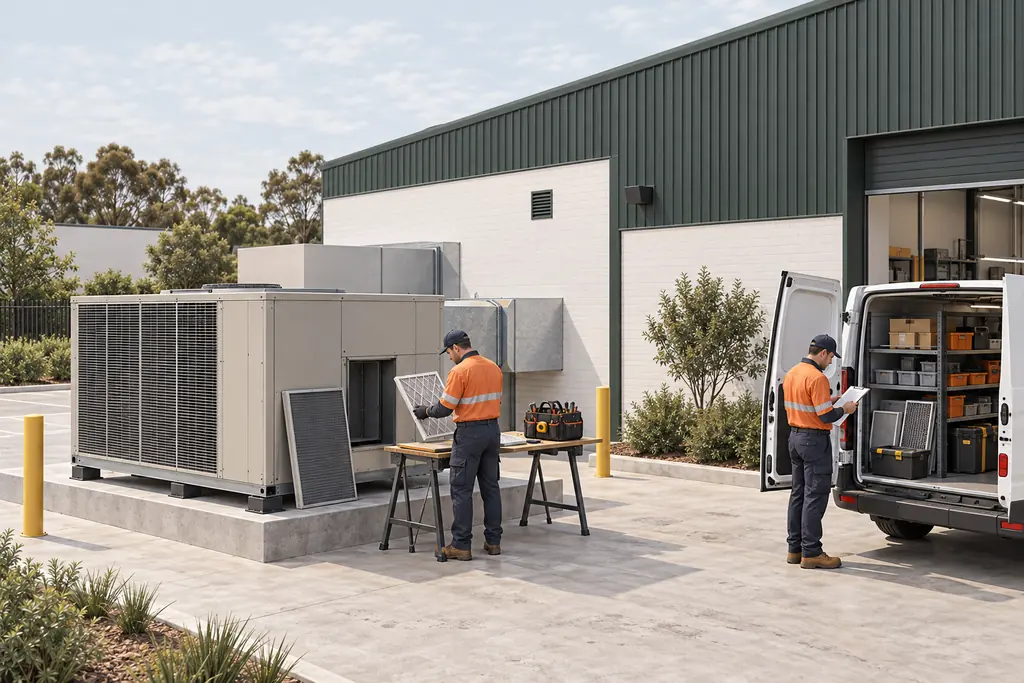
Service and maintenance run on dispatch, truck stock, and fast turnaround. Project work runs on schedules, submittals, and progress billing. The same people, parts, and systems usually serve both.
Systems we often see
- Field service (ServiceTitan, FieldEdge)
- Inventory and truck stock
- ERP modules
- Project accounting
Where the work gets stuck
- 01
Service and project cost blur
Separating the two is hard when field and accounting systems don't connect.
- 02
Dispatch under pressure
Balancing emergency calls, scheduled maintenance, and project work across technicians.
- 03
Truck stock and the warehouse
Material spread across trucks, shelves, and job sites, with little tracking of what was used.
- 04
Call details for billing
Parts used and time per task need capturing before the invoice and the customer update go out.
One handoff, step by step
What does the next technician need before arriving?
- Step 1, Previous technician, in Field service app: Records what was found, what was fixed, and what was deferred.
- Step 2, Dispatcher, in Field service app: Assigns the call with the unit's service history attached.
- Step 3, Warehouse, in Inventory and truck stock: Confirms the likely parts are on the truck. Re-keyed by hand from the previous system. Then a check: Likely parts on the truck? If not, the dispatcher moves the visit.
- Step 4, Technician, in Field service app: Arrives with the agreement terms and site access details.
- Ends with: Visit completed.
A typical sequence to show the kind of handoff we map. Not a client finding.
Recognize this handoff?
Walk us through one of yours.
How we help
- Digital Operations AssessmentReview your service management and project accounting systems to find the integration gaps.
- Software Selection & ImplementationImplement field service software like ServiceTitan, FieldEdge, or ERP modules set up for mechanical work.
- Software IntegrationConnect dispatch, inventory, and project accounting, designed so parts, labor, and cost post to the right call or project.
Talk through your operations
Tell us how a service call becomes an invoice today. We'll talk through what the next technician is missing.